

RESOURCES
Documents

Guidelines for applying the IUCN protected area management categories to Marine Protected Areas
This guide is a reference for managers of protected areas. Developed in collaboration with experts, it offers practical guidelines for effective and sustainable management.

An Introduction to the Marine Protected Area Guide
The MPA Guide is a science-based tool to identify different types of MPAs and connect these types of MPAs with the outcomes they are expected to achieve.

Marine Protected Area Impacts Globally
This annotated bibliography (compiled by the Bermuda Ocean Prosperity Programme) is intended as a resource for learning more about how MPAs have been developed and implemented in countries around the world.
The Bermuda Ocean Prosperity Programme (BOPP) is a community-driven programme to foster the sustainable, profitable, and enjoyable use of ocean resources. This programme is a partnership between the Government of Bermuda, the Waitt Institute, and Bermuda Institute of Ocean Sciences (BIOS).
.jpeg)
International Guide on Marine/Maritime Spatial Planning
The purpose of the guide is to assist governments, partners, and MSP practitioners globally in the development of Marine Spatial Plans and to capture the evolution and lessons learned globally on MSP since the first guide was published in 2009 by IOC-UNESCO. The development of MSP as a practice is evolving to address new and emerging issues related to ecosystem-based management of the ocean.

Marine Spatial Planing Legal Drafting Guide
A comprehensive guide on best practices for drafting and shaping legislation for Marine Spatial Planning, with examples of legislation for Marine Protected Areas and MSP policy from around the world. This was a joint effort by the Waitt Institute, Environmental Law Institute, and Animals | Environment PLLC, based on the work accomplished at the 2019 Blue Prosperity Workshop on Drafting Legislation to Support MSP in Auckland, New Zealand.

Gender-based Ocean Uses and Values: Implications for Marine Spatial Planning
The report promotes gender-sensitive marine planning by revealing gendered ocean use patterns and urging inclusive, data-driven policies for equitable blue economy growth.

Fiji Blue Economy Workshop Report
The Government of Fiji, in partnership with Blue Prosperity Fiji and UNDP, held a workshop to discuss Fiji's Blue Economy development.
Blue Prosperity Fiji is a partnership between the Government of Fiji and the Waitt Institute to support Fiji’s vision for a healthy ocean, thriving communities, and prosperous economies.
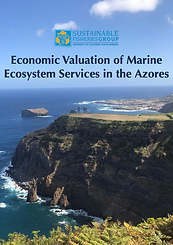
Economic Valuation of Marine Ecosystem Services in the Azores
The results from this report estimate baseline economic values of ecosystem services, and how current and potential future threats may affect these values, which can be used to inform natural resource management decisions in the Azores and make the tradeoffs between conservation and development more explicit.
The Blue Azores Program, a partnership between the Regional Government of the Azores, the Oceano Azul Foundation, and the Waitt Institute, protects, promotes, and values the marine natural capital of the Azores, supporting a healthy ocean as the basis of a prosperous and sustainable blue economy.

Near-Global Spawning Strategies of Large Pelagic Fish
This study uses global larval data to model spawning habitats of large pelagic fish, revealing consistent seasonal and spatial patterns that suggest evolutionary benefits of shared spawning grounds and offering insights to guide fisheries management and marine protection.

The State of World Fisheries and Aquaculture
This report showcases the efforts to advance sustainable aquatic food systems through improved data, management, innovation, and policy action, offering the most up-to-date global insights and projections to guide future fisheries and aquaculture development.

Code of Conduct for Responsible Fisheries
This Code sets out principles and international standards of behavior for responsible practices with a view to ensuring the effective conservation, management, and development of living aquatic resources, with due respect for the ecosystem and biodiversity

Guide to Fisheries Science and Stock Assessments
The Atlantic States Marine Fisheries Commission assesses fish stocks to determine their status, to evaluate how they may be affected by potential management actions, and to forecast their future conditions.

Adaptive Management of Fisheries in Response to Climate Change
This work contributes to the overall scope of improving the resilience of fisheries,
reducing their vulnerability to climate change, and enabling managers to respond in
a timely manner to the projected changes in the dynamics of marine resources and
ecosystems.

A Fishery Manager's Guidebook
This guidebook outlines the evolution of fisheries management toward an ecosystem approach that balances human and ecological well-being, addressing past management failures by integrating ecosystem interactions, uncertainty, and stakeholder participation to ensure sustainable use of aquatic resources.

Managing Small-Scale Fisheries: Alternative Directions and Methods
This report looks beyond the scope of conventional fishery management to alternative concepts, tools, methods, and conservation strategies.

EU Biodiversity Strategy for 2030
The strategy aims to put Europe's biodiversity on a path to recovery by 2030, and contains specific actions and commitments. It is the proposal for the EU's contribution to the upcoming international negotiations on the global post-2020 biodiversity framework.

Sustainable Development Goals: #14 Life Below Water
The Global Goals and the 2030 Agenda for Sustainable Development seek to end poverty and hunger, realise the human rights of all, achieve gender equality and the empowerment of all women and girls, and ensure the lasting protection of the planet and its natural resources.

Kunming-Montreal Global Biodiversity Framework
The Kunming-Montreal Global Biodiversity Framework (GBF) is an outcome of the 2022 United Nations Biodiversity Conference. Its tentative title had been the "Post-2020 Global Biodiversity Framework." The GBF was adopted by the 15th Conference of Parties to the Convention on Biological Diversity on 19 December 2022.

Final Science Report | Blue Prosperity Fiji Ocean Science Expedition
The Government of Fiji, in partnership with the Waitt Institute through Blue Prosperity Fiji and Scripps Institution of Oceanography, carried out the largest coral reef survey in the nation’s history. The results from this expedition will guide future decisions on marine protection and sustainable management of the country’s ocean resources.

Final Science Report | Blue Prosperity Vanuatu Coral Reef Study
From 1–21 September 2023, the Government of Vanuatu, in partnership with the Waitt Institute through Blue Prosperity Vanuatu, conducted the most extensive coral reef survey in the nation’s history. Covering 109 sites across all six provinces, this study provides critical baseline data to guide Vanuatu’s marine protection and sustainable ocean management efforts.
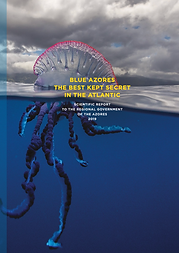
Scientific Report | Blue Azores: The Best Kept Secret in the Atlantic
This report, which contains the scientific results of two expeditions, along with the scientific information collected in the Azores over the past several decades, confirms that the marine life of the Azorean Sea is unique, diverse, and vibrant. However, it is also fragile and under pressure, and urgently needs protection.
The Blue Azores Program, a partnership between the Regional Government of the Azores, the Oceano Azul Foundation, and the Waitt Institute, protects, promotes, and values the marine natural capital of the Azores, supporting a healthy ocean as the basis of a prosperous and sustainable blue economy.