

RESOURCES
Reports
WAITT INSTITUTE REPORTS
Marine Protection

Marine Protected Area Impacts Globally
This annotated bibliography (compiled by the Bermuda Ocean Prosperity Programme) is intended as a resource for learning more about how MPAs have been developed and implemented in countries around the world.
The Bermuda Ocean Prosperity Programme (BOPP) is a community-driven programme to foster the sustainable, profitable, and enjoyable use of ocean resources. This programme is a partnership between the Government of Bermuda, the Waitt Institute, and Bermuda Institute of Ocean Sciences (BIOS).

Near-Global Spawning Strategies of Large Pelagic Fish
This study uses global larval data to model spawning habitats of large pelagic fish, revealing consistent seasonal and spatial patterns that suggest evolutionary benefits of shared spawning grounds and offering insights to guide fisheries management and marine protection.
Blue Economy

Fiji Blue Economy Workshop Report
The Government of Fiji, in partnership with Blue Prosperity Fiji and UNDP, held a workshop to discuss Fiji's Blue Economy development.
Blue Prosperity Fiji is a partnership between the Government of Fiji and the Waitt Institute to support Fiji’s vision for a healthy ocean, thriving communities, and prosperous economies.
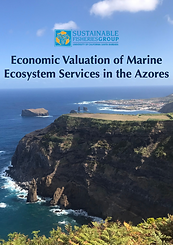
Economic Valuation of Marine Ecosystem Services in the Azores
The results from this report estimate baseline economic values of ecosystem services, and how current and potential future threats may affect these values, which can be used to inform natural resource management decisions in the Azores and make the tradeoffs between conservation and development more explicit.
The Blue Azores Program, a partnership between the Regional Government of the Azores, the Oceano Azul Foundation, and the Waitt Institute, protects, promotes, and values the marine natural capital of the Azores, supporting a healthy ocean as the basis of a prosperous and sustainable blue economy.
Marine Spatial Planning

Marine Spatial Planing Legal Drafting Guide
A comprehensive guide on best practices for drafting and shaping legislation for Marine Spatial Planning, with examples of legislation for Marine Protected Areas and MSP policy from around the world. This was a joint effort by the Waitt Institute, Environmental Law Institute, and Animals | Environment PLLC, based on the work accomplished at the 2019 Blue Prosperity Workshop on Drafting Legislation to Support MSP in Auckland, New Zealand.

Science

Final Science Report | Blue Prosperity Fiji Ocean Science Expedition
The Government of Fiji, in partnership with the Waitt Institute through Blue Prosperity Fiji and Scripps Institution of Oceanography, carried out the largest coral reef survey in the nation’s history. The results from this expedition will guide future decisions on marine protection and sustainable management of the country’s ocean resources.

Final Science Report | Blue Prosperity Vanuatu Coral Reef Study
From 1–21 September 2023, the Government of Vanuatu, in partnership with the Waitt Institute through Blue Prosperity Vanuatu, conducted the most extensive coral reef survey in the nation’s history. Covering 109 sites across all six provinces, this study provides critical baseline data to guide Vanuatu’s marine protection and sustainable ocean management efforts.
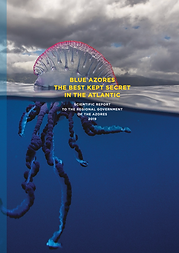
Scientific Report | Blue Azores: The Best Kept Secret in the Atlantic
This report, which contains the scientific results of two expeditions, along with the scientific information collected in the Azores over the past several decades, confirms that the marine life of the Azorean Sea is unique, diverse, and vibrant. However, it is also fragile and under pressure, and urgently needs protection.
The Blue Azores Program, a partnership between the Regional Government of the Azores, the Oceano Azul Foundation, and the Waitt Institute, protects, promotes, and values the marine natural capital of the Azores, supporting a healthy ocean as the basis of a prosperous and sustainable blue economy.
GLOBAL RESOURCES
30x30 Context


Sustainable Development Goals: #14 Life Below Water
The Global Goals and the 2030 Agenda for Sustainable Development seek to end poverty and hunger, realise the human rights of all, achieve gender equality and the empowerment of all women and girls, and ensure the lasting protection of the planet and its natural resources.

Kunming-Montreal Global Biodiversity Framework
The Kunming-Montreal Global Biodiversity Framework (GBF) is an outcome of the 2022 United Nations Biodiversity Conference. Its tentative title had been the "Post-2020 Global Biodiversity Framework." The GBF was adopted by the 15th Conference of Parties to the Convention on Biological Diversity on 19 December 2022.
Marine Protected


Marine Spatial Planning

International Guide on Marine/Maritime Spatial Planning
The purpose of the guide is to assist governments, partners, and MSP practitioners globally in the development of Marine Spatial Plans and to capture the evolution and lessons learned globally on MSP since the first guide was published in 2009 by IOC-UNESCO. The development of MSP as a practice is evolving to address new and emerging issues related to ecosystem-based management of the ocean.
Sustainable Fisheries

The State of World Fisheries and Aquaculture
This report showcases the efforts to advance sustainable aquatic food systems through improved data, management, innovation, and policy action, offering the most up-to-date global insights and projections to guide future fisheries and aquaculture development.


Adaptive Management of Fisheries in Response to Climate Change
This work contributes to the overall scope of improving the resilience of fisheries,
reducing their vulnerability to climate change, and enabling managers to respond in
a timely manner to the projected changes in the dynamics of marine resources and
ecosystems.

A Fishery Manager's Guidebook
This guidebook outlines the evolution of fisheries management toward an ecosystem approach that balances human and ecological well-being, addressing past management failures by integrating ecosystem interactions, uncertainty, and stakeholder participation to ensure sustainable use of aquatic resources.
